



Why German Design Still Defines Global Standards
Few countries have influenced modern design as profoundly as Germany.
From the radical simplicity of Bauhaus to the precision engineering of today’s hypercars, one principle has remained constant:
Form follows function.
But what does that actually mean—and why does it still matter in 2026?
The Bauhaus Foundation: Where It All Began
In the early 20th century, the Bauhaus movement redefined design.
It rejected ornament and embraced:
- Simplicity
- Functionality
- Industrial materials
Design was no longer about decoration.
It became about purpose.
This philosophy laid the groundwork for everything that followed—from furniture to architecture to product design.
Precision Engineering: The German Mindset
As Germany industrialized, design evolved—but its core philosophy didn’t change.
Instead, it deepened:
- Every component must serve a function
- Every detail must justify itself
- Every product must perform consistently over time
This is where design meets engineering—a defining characteristic of German craftsmanship.
The Hypercar Era: Performance as Design
Today, the purest expression of this philosophy can be found in hypercars.
Here, design is no longer separate from performance—it is performance.
- Carbon fiber structures reduce weight
- Ergonomics enhance driver control
- Materials are selected for both function and beauty
Nothing is arbitrary.
Everything is engineered.
What This Means for Modern Furniture Design
This philosophy is no longer limited to cars or architecture.
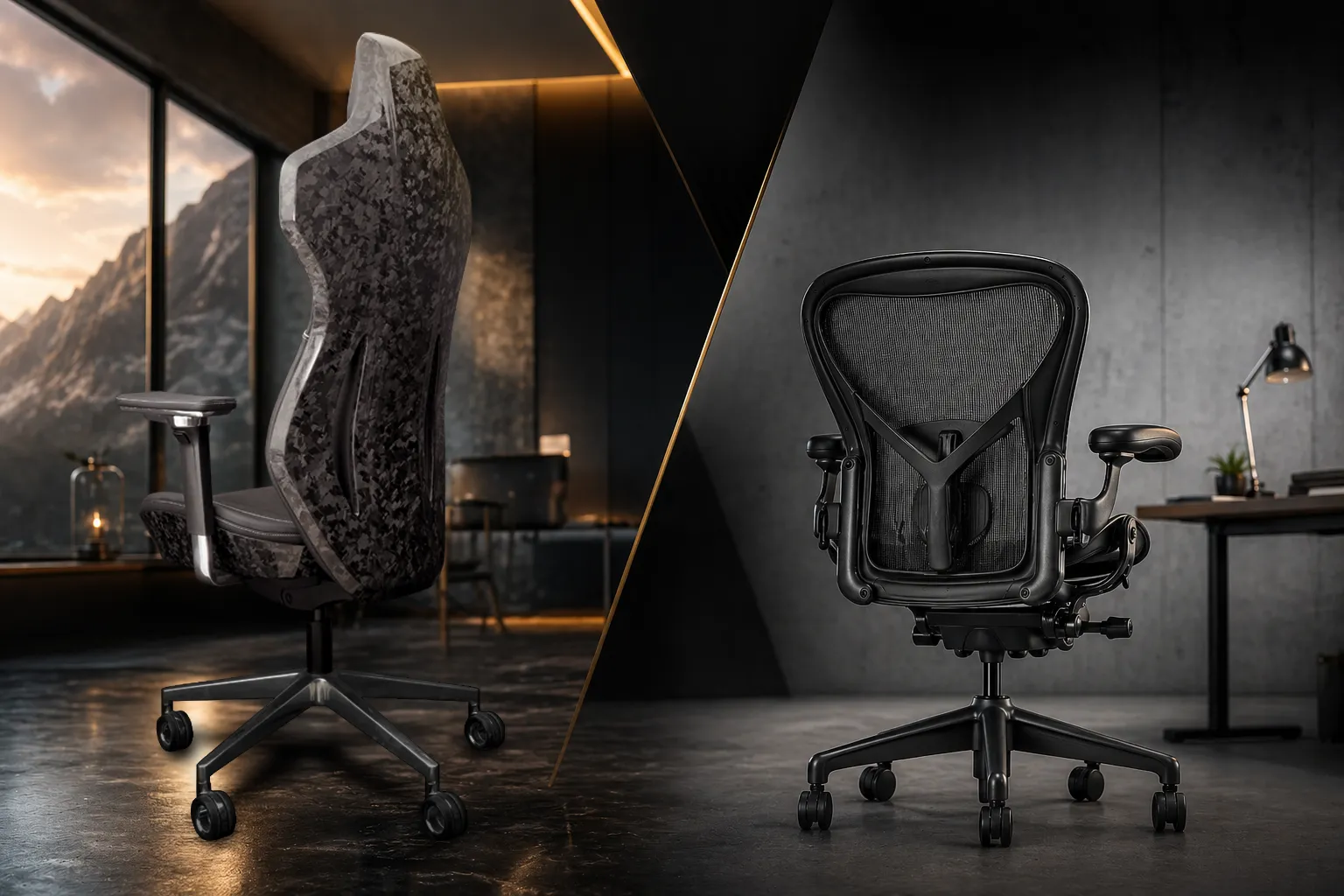
It now defines the next generation of luxury office furniture.
A modern high-end chair must:
- Support long hours of focused work
- Use materials that perform over time
- Maintain a clean, intentional aesthetic
In other words: It must justify its existence.
The Rise of Functional Luxury
We are entering a new era of design:
👉 Functional luxury
This means:
- No unnecessary elements
- No superficial decoration
- No compromise between beauty and performance
Luxury is no longer about excess.
It’s about precision, intention, and clarity.
How Fiberseats Embodies This Philosophy
Fiberseats sits at the intersection of:
- Bauhaus simplicity
- German engineering
- Hypercar-inspired performance
Every design decision follows the same principle:
If it doesn’t serve a purpose, it doesn’t belong.
This results in chairs that are:
- Structurally efficient (carbon fiber)
- Ergonomically refined
- Visually minimal yet powerful
Not designed to impress at first glance— but to prove their value over time.
Why This Matters More Than Ever
In a world full of overdesigned, short-lived products, German design philosophy offers something rare:
Clarity.
It reminds us that:
- Good design is honest
- Great design is inevitable
- And true luxury is earned through function
Final Thought
From Bauhaus to hypercars, the evolution of German design tells a consistent story:
Remove what doesn’t matter. Perfect what does.
That philosophy doesn’t just create better products. It creates better experiences.
Experience Design That Performs
If you value precision, clarity, and performance in every detail:
Explore Fiberseats and discover how German design philosophy translates into modern luxury seating.